The construction industry is at a unique junction, as demands for faster and more profitable projects go alongside calls for greater environmental responsibility. Here’s a number worth considering : according to research published in the National Institutes of Health, construction and demolition waste accounts for 30% of total global waste. Along with being an environmental concern, it represents a burden that impacts profitability and operational efficiency.
Contractors, engineers, and builders are exploring new approaches to construction, in attempts to respond to the question: can we build better? The answer increasingly points to offsite construction. More precisely, the answer lies in modular and prefab construction methods, which can deliver speed and profitability, without hurting sustainability.
Modular Construction’s Sustainability Advantages
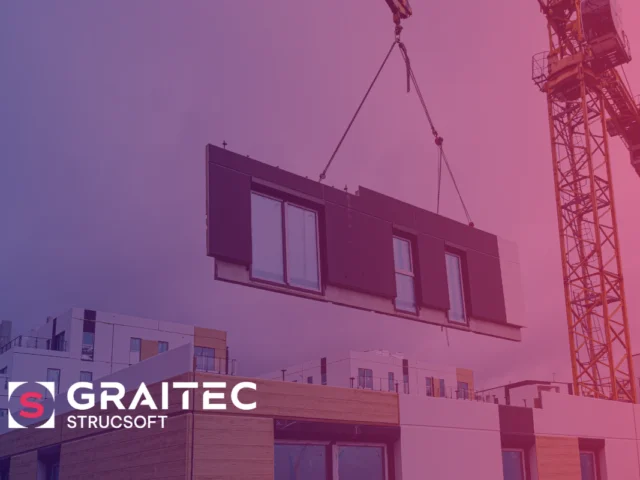
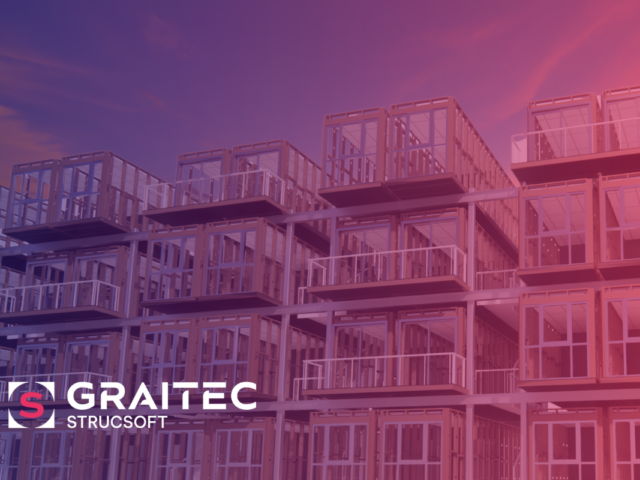
As opposed to traditional methods of construction, prefab or modular construction manufactures elements or complete sections of a building in a factory setting.
Factory-based prefab construction has demonstrated material waste reduction of up to 90% compared to conventional building methods, resulting from
- Precision manufacturing: Controlled factory environments and machinery that enable construction materials such as wood or light gauge steel to be cut to precision
- Integrated design: BIM-driven design processes optimize material usage across light gauge steel framing and timber assemblies
Energy Efficiency
Buildings constructed using modular methods demonstrate 15% lower operational energy costs compared to site-built structures. The factory precision that is inherent in prefab or modular construction results in tighter building envelopes, reducing thermal bridging and air infiltration. When combined with high performance insulation, these gains compound significantly throughout a building’s lifecycle.
Embodied Carbon Considerations
Embodied carbon is a critical sustainability metric that refers to the emissions released throughout a material’s lifecycle, from extraction to disposal. Building materials currently account for 11% of global greenhouse gas emissions, with concrete and steel being primary contributors.
Prefab and modular construction facilitate the integration of materials such as wood and mass timber, which store atmospheric carbon throughout the building’s lifecycle. The lighter weight of engineered wood products also reduces transportation emissions throughout the supply chain.
It is worth noting that the majority of emissions attributed to the steel sector occur during the process of converting iron ore into crude steel. The two major categories of steel used in construction – hot rolled and cold formed steel (which includes light gauge steel) like all other types of steel, are 100% recyclable.
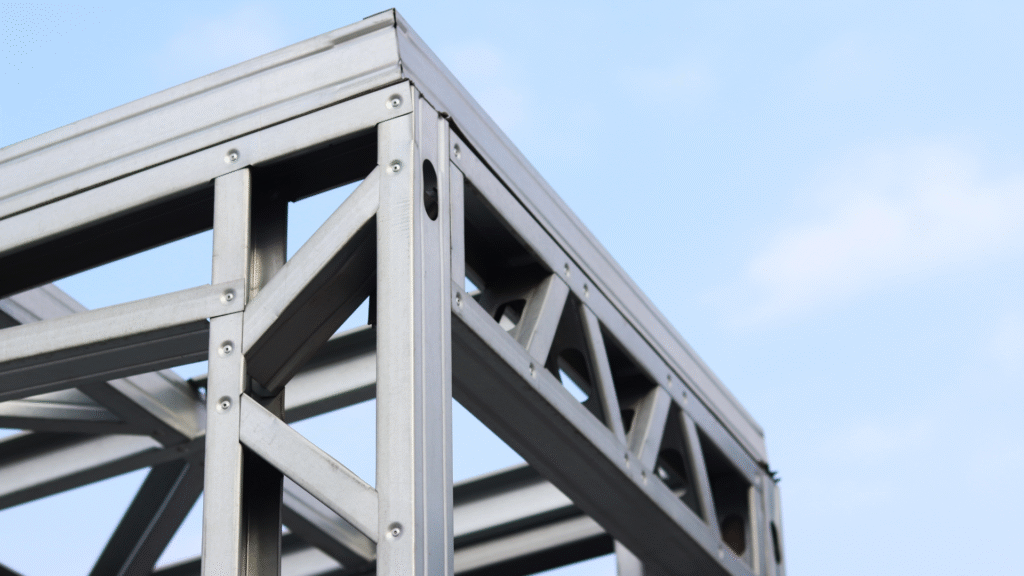
Cold formed steel on the other hand tends to contain 25% recycled steel, and its production is much less environmentally harmful as it uses the electric arc furnace method as opposed to the blast oxygen furnace method used for hot rolled steel production. It is also worth noting that prefab or modular construction tend to rely more heavily on cold formed and light gauge steel for its durability, machinability and ease of transport.
Modular and prefab construction case studies: Net Zero Performance in Practice
Rocky Mountain Institute Innovation Center – Colorado
RMI’s headquarters demonstrates the performance of prefab construction in extreme climates. Completed in 2015, the 15,610-square-foot facility utilized modular foam core structural insulating panels to achieve a hyper-insulated building envelope. The building eliminated mechanical cooling requirements entirely, while
Combined with triple-pane windows, and passive solar design, the building eliminated mechanical cooling requirements entirely, while consuming heating energy equivalent to a single mid-sized home.
Denver's Modular Housing Initiative
Colorado’s offsite construction industry is growing rapidly, tackling both housing affordability and sustainability in one stroke. A prime example is Denver’s Sun Valley neighborhood redevelopment, where multiple modular projects – including the six-story, 77-unit West Holden Place are proving that prefab can scale effectively for dense urban infill while delivering mixed-income homes faster and with less waste.
One Thousand One – Philadelphia's Prefab Innovation
One of the largest prefab residential projects in the United States, Philadelphia’s One Thousand One integrates panelized construction with cold-formed light gauge steel framing systems. The project’s cross-braced bearing wall panels reduce structural weight and labor requirements while maintaining load-bearing capacity. Comprehensive BIM workflows enabled precise material quantification and trade coordination across the 1,500-unit complex.
Revit Framing Software: Enabling Sustainable Offsite Construction
The sustainability advantages of modular construction depend on sophisticated design and fabrication tools. Strucsoft’s Revit framing software delivers the precision and efficiency required to increase efficiency and in both wood and light gauge steel framing applications.
Employing Strucsoft’s ability to help users limit materials waste, Blueprint Robotics has been able to achieve their efficiency goals. “Our goal is to have zero land-fill water. From a sustainability standpoint, we put as little trash in the bin as we can…The way you get to there is through data, and that’s how Graitec has helped us in our own personal goal to be a more sustainable company…their systems provide us with data that we can utilize to perform better” explains Blueprint COO, Jason Bos.
Strucsoft’s comprehensive framing software for Revit enables:
- Automated frame design: Replicate optimized designs across multiple modules
- Clash detection: Eliminate costly field corrections before fabrication
- Material optimization: Minimize waste through precise cutting schedules
- Transportation planning: Optimize finished module configurations for shipping efficiency

Looking Ahead
The data is clear: modular construction and prefab building methods offer a viable pathway to increasing the industry’s sustainability and environmental responsibility. By using carbon-sequestering materials like mass timber, delivering precision throughout the production process, and dramatically reducing material waste, offsite construction shows undeniable potential for the future.
When combined with reduced project timelines and lower lifecycle costs, prefab construction represents both an environmental imperative and a business opportunity for forward-thinking contractors, engineers, and builders.
Ready to optimize your prefab construction workflow? Discover how Strucsoft’s Revit framing software can help you reduce waste, accelerate design timelines, and achieve your sustainability goals. Contact our team to learn more or request a demo today.
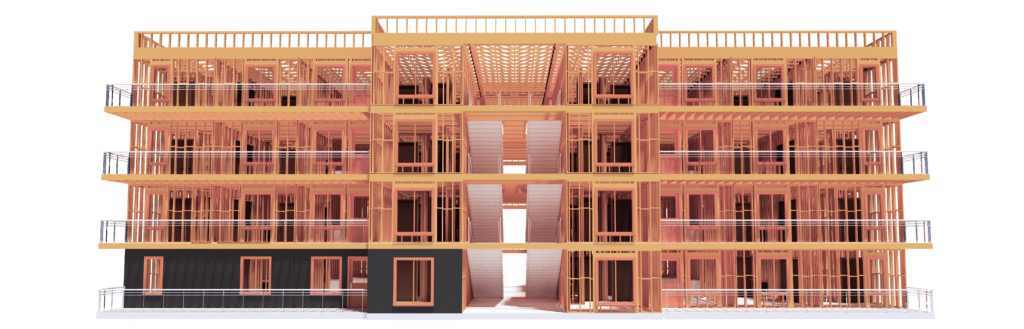
Discover Strucsoft’s offsite framing software for prefab and modular construction in Revit
Request Your Free Trial
The industry's leading Revit framing software